
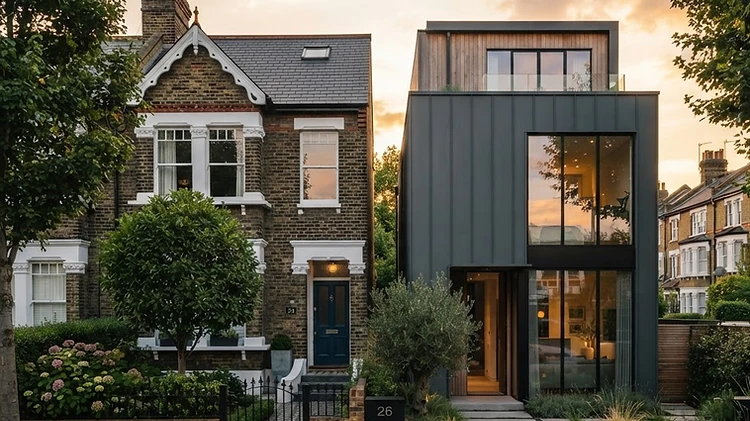
The honest comparison
There's no universally "better" choice — it depends on your budget, timeline, and appetite for work. Here's how they genuinely compare.
Price
- New build — you pay a premium for a finished, warrantied home. Developer incentives can offset this.
- Existing — often cheaper per square foot, but you may need to budget for renovations.
Running costs
- New build — built to current energy standards, so heating bills are typically lower.
- Existing — older homes may need insulation, a new boiler, or double glazing to match new build efficiency.
Maintenance
- New build — everything is new, with a 10-year warranty. Minimal maintenance in the first few years.
- Existing — expect ongoing maintenance. Roofs, boilers, and electrics all have lifespans.
Customisation
- New build — you can often choose finishes and fittings if you buy off-plan.
- Existing — you can extend, convert, and remodel, subject to planning permission.
Resale
- New build — the "new build premium" fades once the home is no longer new.
- Existing — value tracks the local market more predictably.
New builds win on convenience and running costs. Existing homes win on price per square foot and freedom to alter. Choose based on what you value most.
Our take
For most first-time buyers, a new build offers the best combination of low running costs, warranty protection, and financial incentives. For buyers who want space to put their own stamp on a home, an existing property often delivers better value. We handle both — and we'll tell you honestly which suits your situation.
Looking for your next home?
Browse our latest residential and new build listings, synced live from Zoopla.